Trial program · Panama and the Pacific coast of Costa Rica
Be among the first to have a Moho Tiny at home.
A personal seismograph, made in Volcán, Chiriquí, Panama.
Set it up, watch it record the ground in the app or on your Home Assistant dashboard, and help us test it in real homes. It is yours to keep after the program.
Apply and tell us where you would install it.
Apply to the programWhat is Moho Tiny
A seismograph in your home, ready to plug in.
When the ground shakes, you usually find out later from the news or an app, with data from a station miles away. What happened under your own home goes unrecorded. Moho Tiny records the ground under your home day and night, so you can check for yourself or turn it into automations with Home Assistant.
Plug it in and go
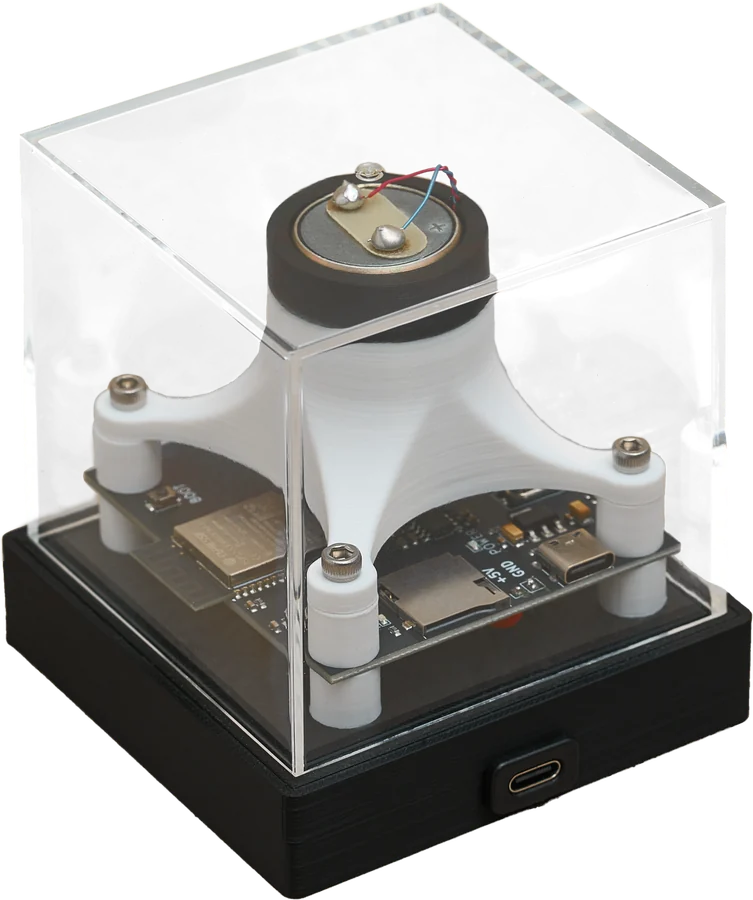
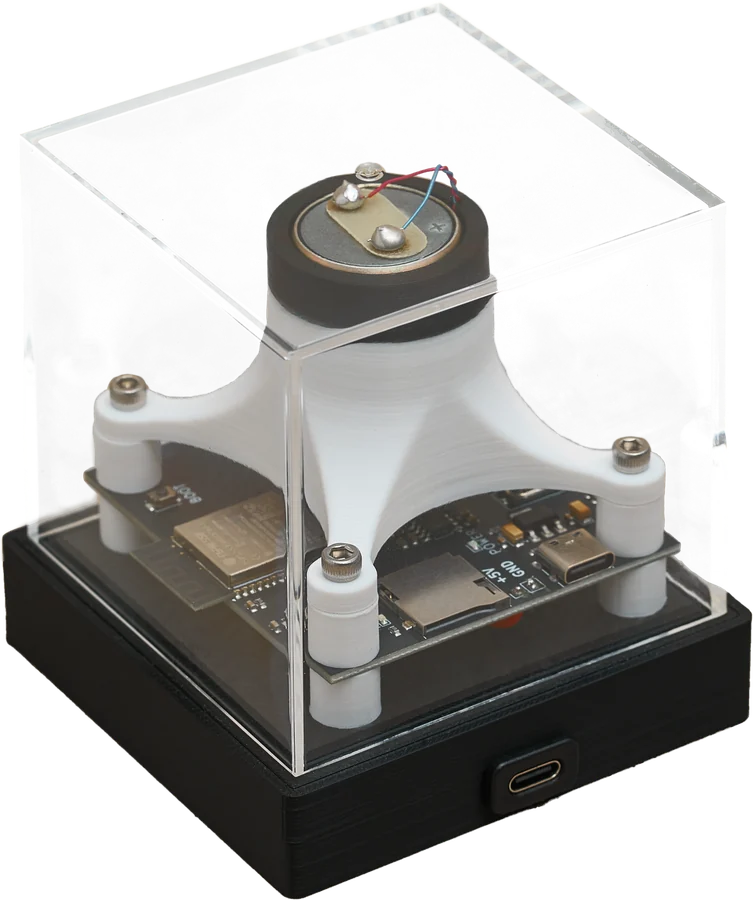
The sensor, electronics and Wi-Fi come in one compact box: there is no Raspberry Pi to buy and nothing to assemble. Connect it to Wi-Fi and it starts measuring. Inside is a geophone, the type of sensor used in professional seismic monitoring; our team tests and selects each one.
The Moho Discovery app
Listen to the ground with headphones: a passing truck becomes a low rumble. Jump next to the unit and watch your stomp land on the meter. Open the event log to look back at what it recorded. Free; on Android today and on iOS later.
Integrates with Home Assistant via MQTT
Ground motion shows up on your dashboard next to your weather station, energy and air-quality sensors. It runs locally, with no cloud account and no subscription. Your data stays in your Home Assistant, you get API access, and it keeps measuring without internet.
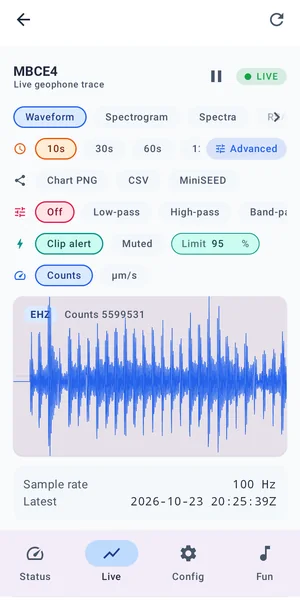
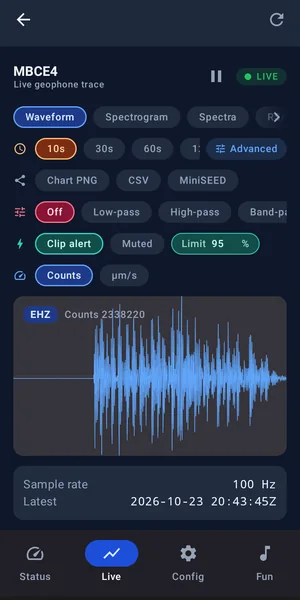
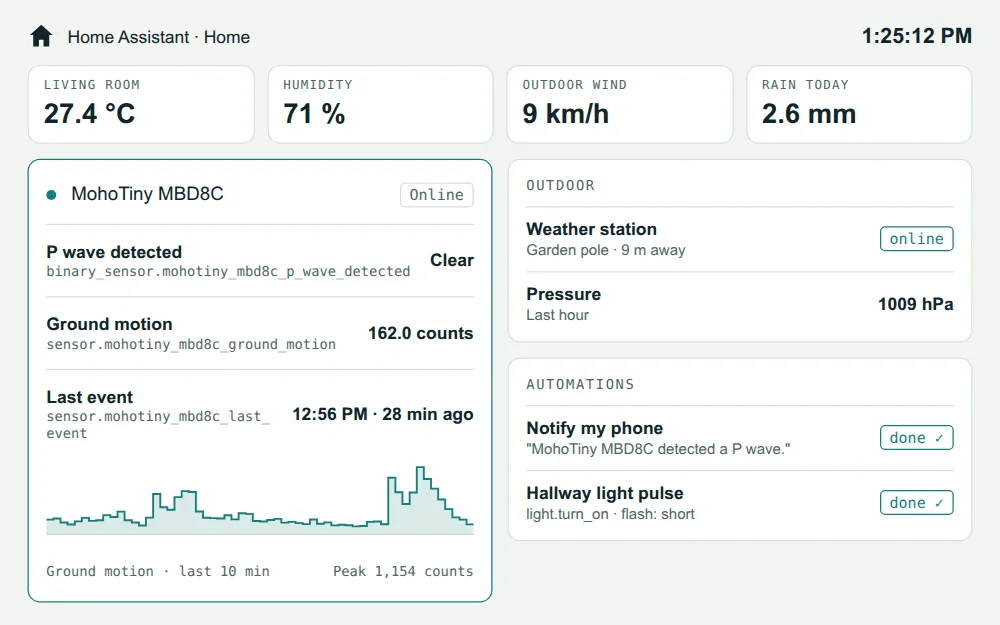
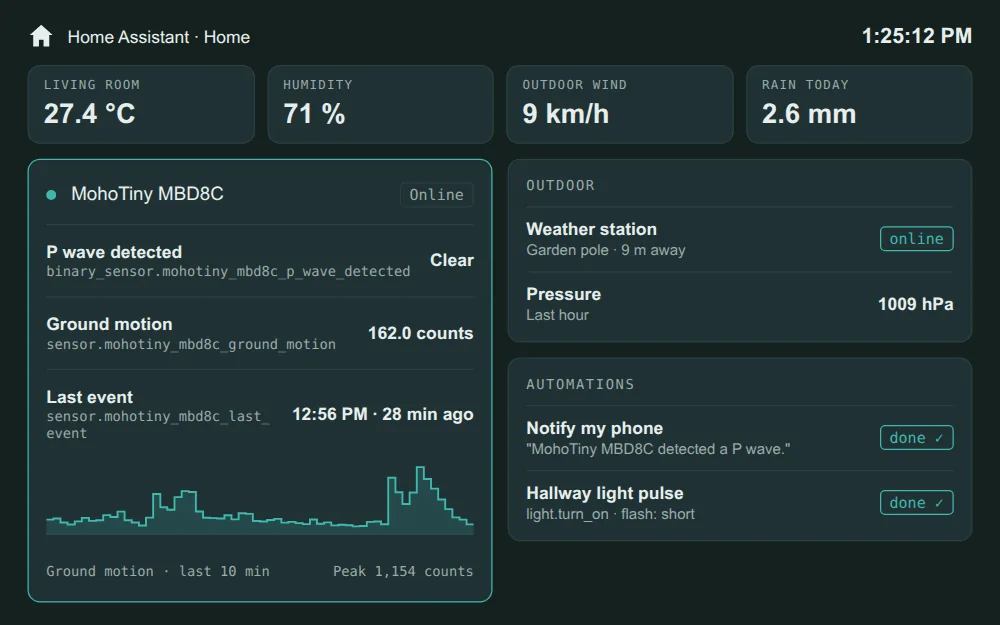
Moho Tiny is still in development: the screens and data you see here may change. That is why we are looking for testers.
How it works
Four steps, from application to your station.
You apply
Fill in the form before November 29. We accept applications from everywhere to measure interest.
We select you
Between December 1 and 4 we choose within the program zone and notify each selected tester.
You receive it
US$99 with shipping included. Delivery and installation by December 11.
You share your experience
Two short surveys and at least one post with your referral link. Your station can appear as a “founding station”.
Requirements
What you need to take part.
- Live on Panama's Pacific slope (from Chiriquí to Azuero), on any Pacific coast or island of Panama, or on the Pacific coast of Costa Rica.
- Reliable 120 V power, preferably with a small UPS.
- Internet of any kind: speed does not matter.
- Install it on the ground floor, in a fixed, solid spot away from foot traffic and appliances.
- Live 300 meters (1,000 ft) or more from a large, busy road.
- Keep the station on until January 18 and answer two short surveys.
Schedule.
| November 4 | Applications open |
|---|---|
| November 29 | Form closes |
| December 1–4 | Selection and notification |
| By December 11 | Delivery and installation |
| December 18 | First survey |
| January 8 | Second survey |
| January 18 | Program ends |
Application
Apply to the trial program.
It takes about 3 minutes. Sections 1 to 3 are required.
We received your application!
We will write to the email and phone you gave us. Selection runs December 1 to 4.
Your code:
Frequently asked questions.
How much does it cost and what is included?
US$99 for your Moho Tiny, shipping included. The unit is yours to keep after the program. You only pay if you are selected; we will tell you how at that point.
How do I pay?
Yappy, ACH, Zelle, PayPal, Visa or Mastercard card, or direct bank deposit. Who collects the payment and issues the receipt depends on the method.
What if I live outside the zone?
You can still apply: it helps us measure interest. Selection is made inside the program zone.
What is Moho Tiny?
A personal seismograph in a compact, clear case, made in Volcán, Chiriquí, Panama. It records and shows ground motion in the app and integrates with Home Assistant via MQTT. It is an instrument for learning and exploring.
Do I need to know Home Assistant?
No. It is not a requirement: the form only asks whether you use it. We are also looking for families, students and science enthusiasts.
What do I do with the unit during the program?
You install it in the first week, keep it on until January 18, answer two short surveys and share your experience. You get direct support from the team.
Will my station be public?
Only if you allow it: it would appear as a “founding station” with an approximate location, never your address.